

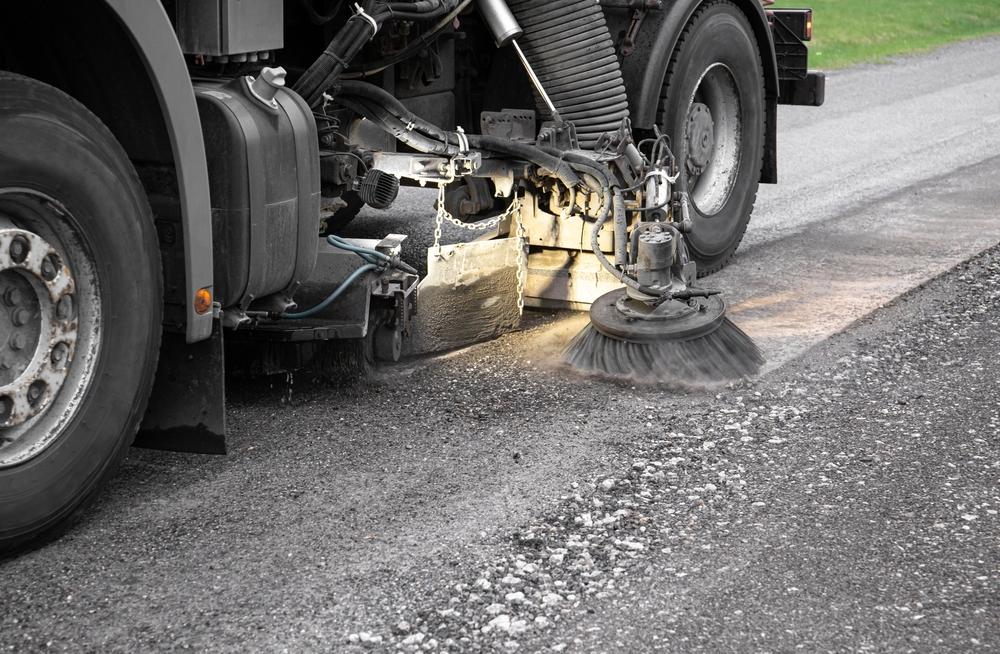
Commercial pavement in Orange County deals with more than vehicle traffic. Dust, landscaping debris, leaves, litter, oil residue, sediment, and material tracked across parking areas can collect along curbs and pavement edges, especially around busy retail, industrial, office, and multifamily properties.
Regular street and parking lot sweeping helps remove that material before it contributes to drainage problems, surface deterioration, and maintenance headaches.
Quick answer: Regular sweeping can help lower long-term commercial pavement repair costs by removing abrasive debris, keeping drainage paths clearer, and making cracks, potholes, and other pavement problems easier to spot before they become larger repairs. Sweeping does not replace asphalt maintenance, but it can support a broader preventive maintenance plan for commercial properties throughout Orange County.
What local property managers should know
-
Dirt and sediment that remain on pavement can collect around cracks, curbs, drains, and low areas where moisture may linger.
-
Orange County Public Works identifies street sweeping as a water-quality best management practice because it removes trash, sediment, fertilizers, and other material before it reaches the storm drain system.
-
Commercial properties in Orange, Santa Ana, Anaheim, Tustin, and surrounding communities can experience substantial vehicle activity that continually introduces debris onto paved surfaces.
-
Clean pavement makes developing cracks, damaged striping, potholes, drainage concerns, and surface deterioration easier for property teams to identify.
-
Sweeping works best as part of a maintenance program that also addresses drainage, cracking, pavement repairs, and other site-specific needs.
Why Does Regular Sweeping Matter for Commercial Pavement in Orange County?
Regular sweeping matters for commercial pavement in Orange County because removing debris helps keep paved surfaces and drainage areas cleaner while giving property managers better visibility into developing pavement damage. It is a preventive maintenance measure rather than a substitute for repairing cracks, potholes, drainage failures, or deteriorated asphalt.
The connection between sweeping and pavement maintenance is particularly relevant locally. OC Public Works handles activities ranging from street sweeping to crack sealing and pavement overlays on maintained county roads, illustrating how cleaning and pavement upkeep function as separate parts of broader roadway maintenance.
Commercial properties face similar maintenance needs on a smaller scale. A shopping center near major Orange transportation corridors, an industrial facility near Anaheim, or an office property toward Tustin may experience repeated vehicle traffic along with landscaping debris and material carried onto pavement by tires.
Built Rite Property Services helps commercial property owners and managers address exterior property maintenance needs. When we evaluate sweeping as part of a maintenance plan, the goal is to keep the property cleaner while helping management teams stay ahead of conditions that can contribute to larger maintenance demands.
What Do Local Street Sweeping Programs Tell Us About Debris Control?
Local street sweeping programs show that debris removal is an established part of maintaining cleaner streets and managing material before it reaches Orange County drainage systems. OC Public Works specifically describes sweeping as a water-quality best management practice and reports collecting trash, sediment, green waste, oils, greases, and other material from roadways.
The City of Orange also includes street sweeping management alongside street maintenance, storm drain services, pavement markings, and other Public Works responsibilities.
For a private commercial property, the maintenance responsibility is different, but the practical principle is useful. Material that is routinely removed cannot continue accumulating along curbs, parking stalls, loading areas, drive aisles, and drainage points.
How Can Debris Increase Long-Term Pavement Maintenance Costs?
Debris can increase long-term pavement maintenance demands when it hides developing damage, interferes with drainage areas, or remains concentrated around vulnerable portions of the paved surface. Keeping pavement clean allows managers to see its actual condition and respond to small problems sooner.
Water is particularly important to watch. OC Public Works notes that potholes can develop because of rain, heavy traffic, normal surface deterioration, and minor cracking that expands over time.
That does not mean sweeping prevents every pothole. It does mean routine cleaning can complement pavement inspections and drainage maintenance. When dirt and leaves cover a crack or collect around a low spot, early deterioration may be easier to overlook.
For Orange County commercial properties with delivery trucks, customer traffic, employee parking, or service vehicles, identifying pavement problems early can make maintenance planning more manageable.
What Warning Signs Should Orange County Property Managers Watch For?
Commercial property managers should watch for recurring debris buildup, blocked drainage areas, cracking, loose pavement, potholes, standing water, and surface deterioration because these conditions can indicate that sweeping alone is no longer enough.
Common warning signs include:
-
Dirt, leaves, or sediment repeatedly collecting against curbs.
-
Debris covering or surrounding storm drain inlets.
-
Small pavement cracks becoming longer or wider.
-
Loose aggregate or crumbling material appearing on the asphalt surface.
-
Water remaining in low areas after surrounding pavement has dried.
-
Potholes developing in drive lanes, parking areas, or loading zones.
-
Pavement damage repeatedly occurring in the same high-traffic locations.
-
Oil, litter, landscaping material, or tracked dirt accumulating faster than the current cleaning schedule can handle.
Properties near busy commercial corridors in Orange, Anaheim, and Santa Ana may require a different sweeping frequency than a smaller, lightly used office parking area.
When Should a Commercial Property Call a Professional?
A commercial property should call a professional when debris accumulates faster than onsite staff can reasonably manage, sweeping requires commercial equipment, or pavement conditions suggest that cleaning needs to be coordinated with repair or broader exterior maintenance.
Property teams can safely monitor pavement for litter, leaves, visible cracks, drainage obstructions, and standing water. They can also document recurring trouble spots after storms or periods of heavy activity.
Professional service becomes more useful when the site includes large parking areas, loading zones, multiple drive aisles, difficult curb lines, or recurring sediment buildup.
Visible potholes, significant cracking, drainage failures, or deteriorating pavement should be evaluated as maintenance issues rather than treated as cleaning problems alone.
What Common Conditions Contribute to Dirty Commercial Pavement?
The most common conditions contributing to dirty commercial pavement include landscaping debris, vehicle traffic, construction or delivery activity, litter, sediment, and materials that collect near curbs and drainage areas.
Landscaping debris: Leaves, clippings, mulch, and small branches can migrate from landscaped islands and perimeter areas onto parking surfaces.
Vehicle traffic: Cars, trucks, delivery vehicles, and service equipment can track dirt and other material across a property.
Loading activity: Industrial and commercial sites around areas such as Anaheim and Santa Ana may have concentrated debris around loading zones and service areas.
Wind and dry conditions: Dust and lightweight debris can move across exposed parking lots before collecting against curbs and wheel stops.
Rainfall: Rain can move accumulated material toward low points and drainage structures. Orange County’s public sweeping program specifically focuses on preventing debris and pollutants from reaching storm drains and receiving waters.
How Can Preventive Sweeping Protect a Commercial Property?
Preventive sweeping can protect a commercial property by reducing debris accumulation, supporting drainage maintenance, improving pavement visibility, and helping managers identify developing repair needs earlier.
A practical maintenance routine should include periodic visual checks between scheduled sweeping visits. Property managers can pay particular attention to entrances, loading areas, dumpster enclosures, landscaped islands, curb lines, and storm drain areas.
After periods of unusual debris accumulation or rainfall, another inspection can reveal whether the normal schedule remains appropriate.
Sweeping should not be used to postpone necessary asphalt work. Once cracks, potholes, failed pavement, or drainage problems appear, those conditions should be addressed through the appropriate maintenance or repair service.
What Results Can Property Managers Expect From Regular Sweeping?
Property managers can realistically expect regular sweeping to produce cleaner paved surfaces, less loose debris, better visibility of pavement condition, and easier ongoing property maintenance. The exact effect on repair costs depends on pavement age, traffic, drainage, existing damage, maintenance history, and other site-specific conditions.
Sweeping is most valuable when treated as one component of preventive maintenance.
A clean parking lot cannot restore deteriorated asphalt. What it can do is make maintenance conditions easier to observe while reducing the amount of loose material sitting on the pavement and around drainage areas.
That distinction helps Orange County property managers set realistic expectations and budget for cleaning and pavement repair separately.
What Sweeping Mistakes Can Lead to Bigger Maintenance Problems?
The biggest sweeping mistakes involve waiting for obvious debris buildup, ignoring drainage areas, and assuming a clean-looking parking lot has no pavement problems.
Mistake: Sweeping only when the property looks dirty.
Consequence: Debris can accumulate in less visible curb lines and drainage areas between cleanings.
Better approach: Establish a schedule based on property activity and inspect problem areas between services.
Mistake: Treating sweeping as pavement repair.
Consequence: Cracks and potholes continue deteriorating even though the surface looks cleaner.
Better approach: Separate cleaning needs from asphalt repair needs.
Mistake: Ignoring recurring debris locations.
Consequence: The same areas require repeated cleanup without addressing why material collects there.
Better approach: Document recurring trouble spots and evaluate drainage, landscaping, traffic, or operational factors.
What Is a Common Commercial Sweeping Scenario in Orange County?
A common Orange County scenario is a commercial parking area that looks reasonably clean from the storefront but develops recurring debris along perimeter curbs, landscaped islands, loading areas, and drainage points.
As traffic continues, additional material enters the property. Landscaping adds organic debris, while vehicles redistribute dirt across drive aisles.
If cleaning is irregular, property management may have less visibility into small cracks and deteriorating areas. Once the pavement is routinely cleaned, it becomes easier to distinguish ordinary surface debris from conditions that may require maintenance.
This is a common scenario, not a specific Built Rite Property Services case study.
What Service Solutions Support Better Pavement Maintenance?
Commercial sweeping and related exterior property maintenance can support better pavement management by keeping parking lots, drive aisles, curb areas, and other paved surfaces cleaner between repair cycles.
At Built Rite Property Services, we can help property managers evaluate an appropriate approach based on site conditions rather than relying on a one-size-fits-all cleaning schedule.
How Does Scheduled Sweeping Compare With Reactive Cleanup?
Scheduled sweeping provides consistent debris control, while reactive cleanup waits until accumulation becomes obvious enough to demand attention. For commercial properties with predictable traffic and debris, a planned schedule can make budgeting and routine site inspections easier.
Reactive cleaning can still make sense after unusual events, heavy debris, construction activity, or other temporary conditions. However, relying exclusively on cleanup after a property becomes visibly dirty can allow less noticeable curb and drainage areas to go longer between services.
The appropriate approach depends on property size, traffic, landscaping, tenant activity, and how quickly debris returns.
Where Can Commercial Properties Use These Services?
Commercial properties in Orange and throughout surrounding Orange County communities can benefit from a maintenance approach tailored to their site conditions. Nearby areas such as Anaheim, Santa Ana, Tustin, and other local commercial centers contain everything from retail parking lots to industrial and office properties with different sweeping demands.
Service availability for a specific property should be confirmed directly with our team.
What Can Happen When Pavement Maintenance Is Delayed?
Delayed pavement maintenance can allow minor cracking and surface deterioration to develop into larger problems, particularly where traffic and water repeatedly affect the same areas. OC Public Works notes that minor roadway cracks can expand over time and develop into larger potholes.
Sweeping cannot stop deterioration that is already underway, but maintaining clean pavement can make those developing conditions easier to recognize.
For commercial properties, earlier identification also gives management more opportunity to plan work around tenants, customers, deliveries, and operating schedules instead of responding only after damage becomes difficult to ignore.
FAQ About Commercial Street Sweeping and Pavement Maintenance
Does street sweeping actually extend pavement life in Orange County?
Street sweeping can support longer-term pavement maintenance by removing debris and improving visibility of cracks, drainage areas, and surface deterioration. It should not be considered a replacement for crack repair, drainage correction, or asphalt maintenance. Its greatest value comes when it is incorporated into a broader preventive maintenance program.
How often should an Orange County commercial parking lot be swept?
The appropriate sweeping frequency depends on traffic, property size, landscaping, surrounding activity, tenant operations, and how quickly debris accumulates. A heavily traveled retail or industrial site may need more frequent attention than a smaller office property. Monitoring how the property looks between services can help determine an appropriate schedule.
Why is drainage important for commercial pavement in Orange County?
Drainage matters because water interacting with existing cracks and pavement deterioration can contribute to worsening surface problems. OC Public Works identifies rain, traffic, surface deterioration, and expanding cracks among factors associated with potholes. Keeping drainage areas visible and free of obvious debris should therefore be part of routine property monitoring.
Is commercial sweeping only about appearance?
No. Appearance is one benefit, but sweeping also removes loose debris and makes pavement conditions easier to inspect. Orange County’s public agencies use street sweeping as part of broader street and stormwater management efforts, including removing sediment and other material before it enters storm drains.
Can sweeping prevent potholes on an Orange commercial property?
Sweeping cannot guarantee that potholes will not develop. Potholes can result from several conditions, including cracking, traffic, water, and normal pavement deterioration. Routine sweeping is better viewed as supporting preventive maintenance by keeping the surface cleaner and making emerging pavement problems easier to see.
What areas of a commercial parking lot need the most attention?
Curb lines, drainage points, loading areas, entrances, dumpster areas, landscaped islands, and heavily traveled drive aisles often deserve extra attention. These locations can collect debris or experience concentrated activity. Property managers should monitor their own site’s recurring trouble spots rather than assuming every section needs identical maintenance.
Should an Anaheim or Santa Ana commercial property sweep after heavy debris accumulation?
Additional sweeping can be appropriate when unusual debris accumulation leaves significant material across paved areas or around drainage points. Property managers should first evaluate site safety and conditions. If standing water, damaged pavement, blocked drainage, or another maintenance issue is present, cleaning may need to be combined with professional evaluation.
Does Orange County treat street sweeping as part of infrastructure maintenance?
Yes. Orange County Public Works includes street sweeping among its road and operations maintenance activities, while the City of Orange manages street sweeping alongside asphalt, concrete, sanitation, storm drain, and other field services. Public programs differ from private property maintenance, but they demonstrate the local role of routine debris removal.
Keep Orange County Commercial Pavement Cleaner and Easier to Maintain
Regular sweeping gives commercial property managers a practical way to control debris, monitor pavement conditions, and support a more proactive maintenance strategy. For Orange County properties, the best plan combines routine cleaning with timely attention to cracks, drainage concerns, potholes, and other developing exterior issues.
Protect Your Commercial Property With Proactive Maintenance
We help local property managers address exterior maintenance needs with solutions based on the conditions of the property.